Introduction Of Programming Languages:
Embarking on the expansive realm of programming languages unveils limitless possibilities and innovation. These languages, spanning from Python’s versatility to JavaScript’s interactivity, constitute the bedrock of software development. Each language possesses distinctive strengths, addressing varied needs in areas such as web development, data science, and system-level programming. Comprehending the intricacies of these languages is essential for unlocking creativity and tackling intricate challenges in the continually evolving field of technology. Join the exploration into the captivating universe of programming languages.
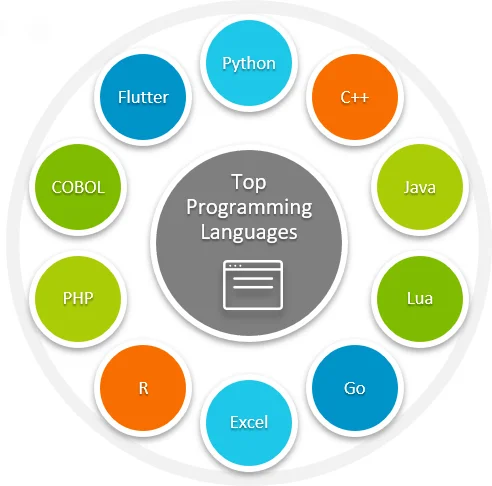
10 Most Popular Programming Languages:
- Python
- JavaScript
- Java
- C++
- C#
- PHP
- Swift
- TypeScript
- Ruby
- Go (Golang)
1. Python:
Python is a high-level, versatile programming language celebrated for its readability and ease of use. Created by Guido van Rossum, it emphasizes code readability and allows developers to express concepts in fewer lines of code than languages like C++ or Java. Python’s extensive standard library and a vast ecosystem of third-party packages make it suitable for various applications, including web development, data science, artificial intelligence, automation, and more. Its simplicity makes Python an excellent choice for beginners, while its scalability and power make it a favorite among seasoned developers. Whether you’re building web applications, analyzing data, or diving into machine learning, Python offers a robust foundation for diverse programming endeavors.

2. JavaScript:
JavaScript is a versatile programming language widely used for creating dynamic and interactive elements within web browsers. Initially developed by Netscape, JavaScript has evolved into a fundamental component of web development. It empowers developers to manipulate the content and behavior of web pages in real time, enhancing the engagement and responsiveness of websites.
Primarily recognized for front-end development, JavaScript enables the creation of interactive user interfaces. It operates directly in the browser, allowing dynamic modification of HTML and CSS, event handling, and seamless communication with servers for asynchronous content updates. Moreover, JavaScript’s influence extends to the server side through technologies like Node.js.
With its extensive adoption, JavaScript has become a crucial skill for web developers. Learning JavaScript opens avenues for crafting dynamic, modern web applications and serves as a foundational step for exploring other front-end frameworks and libraries. As the web landscape continues to evolve, JavaScript maintains its central role, driving innovation and interactivity across digital platforms.
3. Java:
Java is a versatile and object-oriented programming language celebrated for its portability, robustness, and readability. Originating from Sun Microsystems, Java adheres to the “Write Once, Run Anywhere” principle, allowing code to run on different platforms without modification, making it a favored choice for developing cross-platform applications.
Widely utilized in web development, enterprise-level applications, mobile app development (particularly for Android), and large-scale systems, Java’s syntax is designed to be clear and accessible, emphasizing object-oriented principles. Its platform independence is achieved through the Java Virtual Machine (JVM), executing Java bytecode across diverse operating systems.
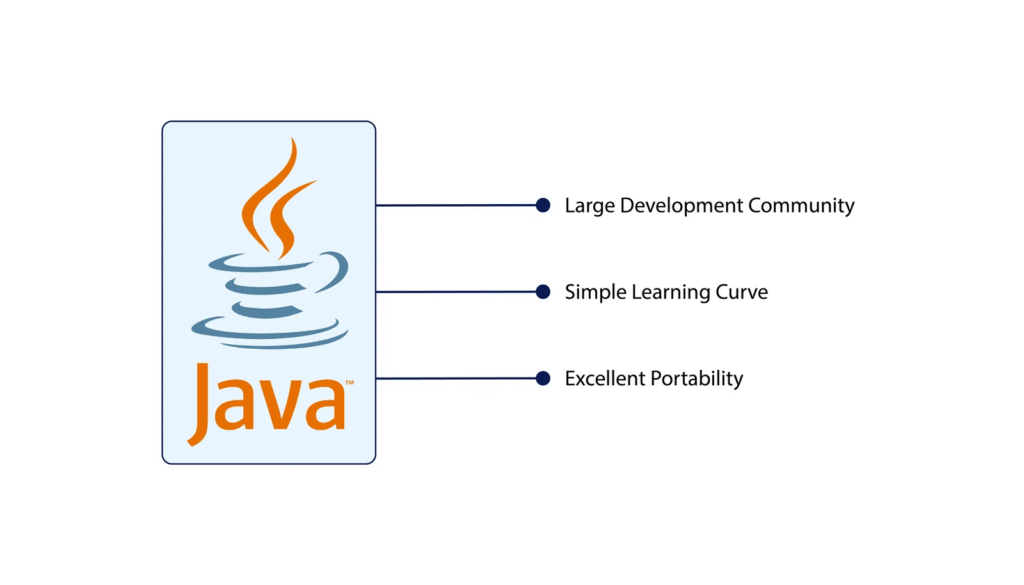
In web development, Java is commonly applied on the server side, empowering the backend of websites and web applications. Recognized for its scalability, performance, and extensive standard libraries, Java enjoys widespread adoption in constructing robust, enterprise-level systems.
Java’s adaptability extends to Android app development, where it stands as the primary programming language. With a large developer community and a rich ecosystem of frameworks and tools, Java remains a dependable choice for various applications, making it valuable for both novices and seasoned developers.
4. C++:
C++ stands out as a powerful and versatile programming language recognized for its efficiency, performance, and adaptability. Evolving from the C programming language, C++ introduces essential object-oriented programming (OOP) features, making it applicable for both low-level system programming and high-level application development.

Extensively utilized across diverse domains, including system/software development, game development, and performance-critical applications, C++ provides developers with the ability to finely control system resources through its syntax, allowing low-level memory manipulation. The incorporation of features such as classes, inheritance, and polymorphism empowers the creation of intricate and reusable code structures.
In the gaming industry, C++ takes a central role, serving as a primary choice for developing graphics-intensive and resource-demanding games. Additionally, C++ finds prominence in crafting software for embedded systems, real-time applications, and other performance-critical scenarios.
While C++ poses challenges for beginners due to its complexity, mastering it establishes a robust understanding of programming principles. This proficiency opens doors to diverse applications, ranging from low-level hardware interactions to high-level software development.
5. C#:
C# (C-Sharp) stands out as a versatile and contemporary programming language, developed by Microsoft. Known for its simplicity, type safety, and object-oriented features, C# finds widespread application in diverse development scenarios.
Especially notable in Windows application development, C# serves as the primary language for constructing desktop applications, Windows services, and components within the Microsoft .NET framework. Its significance extends to game development through the Unity game engine, offering a robust toolset for creating visually engaging games across various platforms.
In enterprise-level software development, C# excels, providing strong support for building scalable and secure applications. Its syntax, akin to other C-based languages, ensures accessibility for developers familiar with C, C++, or Java.
Key features, such as garbage collection and simplified memory management, enhance developer productivity and mitigate the risk of memory-related errors. Additionally, C# supports asynchronous programming, making it well-suited for developing responsive and efficient applications, particularly in web development.
In essence, C# emerges as a versatile language suitable for a broad spectrum of applications, spanning from desktop software to web development, and from game development to enterprise-level solutions. Its integration with Microsoft technologies and compatibility with the .NET framework underpin its widespread adoption in the software development landscape.
6. PHP:
PHP (Hypertext Preprocessor) is a server-side scripting language widely employed in web development. Initially crafted for creating dynamic web pages, PHP has grown into a versatile language supporting a wide array of applications.
Primarily designed for server-side scripting, PHP allows the execution of code on the web server before delivering results to the user’s browser. Its simplicity and seamless integration with HTML make it well-suited for embedding dynamic content within web pages.

A key strength of PHP lies in its capability to interact with databases, making it pivotal in developing database-driven websites and web applications. Frequently paired with database management systems such as MySQL, PHP facilitates the creation of dynamic and data-driven websites.
In addition to supporting various web development paradigms, including procedural and object-oriented programming, PHP’s open-source nature and robust community support contribute to the abundance of pre-built modules and frameworks available, streamlining the development process.
Despite its origins in web development, PHP finds utility in command-line scripting and general-purpose programming tasks. Its prevalence on web servers and smooth integration with popular servers like Apache render it a practical choice for developers engaged in a variety of web projects.
7. Swift:
Swift is a robust and user-friendly programming language developed by Apple specifically for creating applications on macOS, iOS, watchOS, and tvOS. Introduced in 2014, Swift aimed to enhance the programming experience compared to Objective-C, offering a more contemporary and efficient language tailored to Apple’s ecosystem.
Renowned for its speed, safety features, and expressiveness, Swift has become the language of choice for developing applications on iOS and macOS platforms. Its syntax is concise and clear, promoting readability and reducing the likelihood of errors. Swift accommodates both object-oriented and functional programming paradigms, allowing developers flexibility in their coding styles.
One standout feature of Swift is its commitment to safety. The language incorporates modern programming concepts to prevent common errors, enhancing the reliability and stability of applications. Additionally, Swift benefits from automatic memory management, freeing developers from manual memory allocation and deallocation tasks.
Swift Playgrounds, an interactive coding environment, enables developers to experiment with code and visualize results in real time, making it an excellent tool for learning and prototyping.
As an open-source language, Swift has expanded beyond Apple’s ecosystem, gaining traction for server-side development and cross-platform applications. In summary, Swift’s combination of performance, safety, and modern language features positions it as a compelling choice for developers immersed in the Apple development ecosystem.
8. TypeScript:
TypeScript is a statically typed superset of JavaScript, developed by Microsoft to tackle the challenges associated with large-scale JavaScript development. It introduces static typing as an optional feature, allowing developers to explicitly define variable types, function parameters, and return types. This not only enhances code clarity but also aids in early error detection, improving the overall maintainability of the codebase.
A noteworthy aspect of TypeScript is its compatibility with JavaScript. Developers can seamlessly integrate TypeScript into existing projects, thanks to its ability to compile down to standard JavaScript, making it compatible with any JavaScript runtime.
TypeScript supports the latest ECMAScript features and introduces additional elements like interfaces, classes, and modules. These features contribute to building more structured and scalable applications. The language is particularly popular in large-scale application development, especially when used with frameworks like Angular, developed by Google, which extensively utilizes TypeScript.
In essence, TypeScript provides developers with a robust toolset, offering the advantages of static typing, modern language features, and smooth integration with existing JavaScript codebases.
9. Ruby:
Ruby stands out as a dynamic, object-oriented programming language celebrated for its simplicity and productivity. Originating in the mid-1990s, Ruby, crafted by Yukihiro Matsumoto (“Matz”), places a strong emphasis on developer happiness and code readability.
Distinguished by its elegant syntax and flexibility, Ruby empowers developers to write concise and expressive code. It adheres to the “convention over configuration” principle, advocating for clean, human-readable code styles. Supporting both procedural and object-oriented programming, Ruby proves versatile for various application types.
In the realm of web development, Ruby has gained notable traction, especially with the widespread adoption of the Ruby on Rails framework. Commonly known as Rails, this framework streamlines web application development by emphasizing conventions and minimizing the need for repetitive code.
Ruby’s popularity is further fueled by a robust community and an extensive collection of gems, which are libraries or packages in Ruby. Widely used in diverse applications, from web development to scripting tasks and automation, Ruby’s commitment to simplicity, readability, and developer-friendly features makes it an appealing choice for those seeking an elegant and enjoyable programming experience.
10. Go (Golang):
Go, commonly known as Golang, is a statically typed and compiled programming language developed by Google in 2009. Characterized by its simplicity, efficiency, and user-friendliness, suited for concurrent programming and large-scale software development.
Key features of Go include a straightforward syntax, native support for concurrent programming through goroutines, and efficient garbage collection. The language prioritizes readability and maintainability, adopting a minimalistic approach that reduces unnecessary complexity in the code.
Go has found widespread use across different domains, especially in the development of scalable and concurrent systems. Its rapid compilation speed and effective execution make it a preferred choice for creating web servers, networking tools, and distributed systems. Go is also renowned for its robust support in cloud-native application development and is frequently utilized in the construction of microservices.
A notable aspect of Go is its integrated toolset, which includes the GoFmt code formatter and the go get package manager. These tools contribute to a consistent and streamlined development process.
In summary, Go has become a popular language for developers seeking a combination of performance, simplicity, and strong support for concurrent programming, particularly in the creation of resilient and scalable applications.